Physical Address
Market Street , Kamokya KAMPALA
Physical Address
Market Street , Kamokya KAMPALA
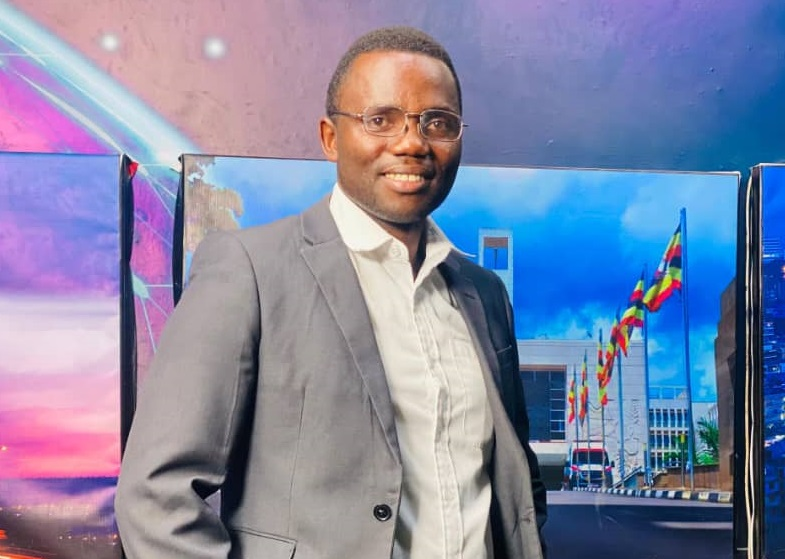
Akansasira Junior Victor,
Writer and Researcher,
0702969211 / 0702969211
“The rules of international law have not been respected,” underscoring concern over sovereignty and the UN Charter. – António Guterres, UN Secretary-General
Where Is International Law in the Shadow of Power?
*“The rules of international law have not been respected,” underscoring concern over sovereignty and the UN Charter.”* António Guterres (UN Secretary-General)
Where is the International Law in the Shadow of Power? The capture and forceful neutralisation of Venezuelan President Nicolás Maduro under the Trump administration – whether interpreted as direct action, regime decapitation strategy, or coercive state takeover—represents a profound stress test for international law.
The United Nations Charter (Article 2[4]) explicitly prohibits the use of force against the territorial integrity or political independence of any state, except in self-defence or with UN Security Council authorisation (United Nations, 1945). Yet history shows that when great powers act, law often follows power rather than restraining it. The Venezuelan episode reinforces an uncomfortable truth: international law functions less as an equal shield and more as a selective instrument. Maduro’s misgovernance, authoritarianism, and economic ruin of Venezuela are well documented, but legality is not contingent on moral approval. If sovereignty is conditional, who decides the conditions—and who enforces them?
The Trump administration’s posture toward Venezuela revived an unapologetic doctrine of coercion. Sanctions, diplomatic isolation, recognition of alternative leadership, and open discussion of military options formed a continuum of pressure rarely seen since the Cold War. Trump himself declared in 2019 that “all options are on the table” regarding Venezuela, signalling a willingness to bypass multilateralism in favour of unilateral force. This approach aligns with realist power theory: states pursue interests, not ideals. The tragedy is not that power exists, but that it operates without responsibility. As you rightly observe, power and impunity have become bedfellows—domestically and internationally. The idea of a “responsible humanity” appears naïve when measured against a global order where might repeatedly overrides law, from Iraq (2003) to Libya (2011), and now Venezuela.
The question of Oil, Gas, and the Political Economy of Invasion is yours to answer!
Venezuela is not just another troubled state; it sits atop the world’s largest proven oil reserves—over 303 billion barrels, according to OPEC and the U.S. Energy Information Administration (EIA, 2023). In geopolitics, such endowments are not neutral facts; they are strategic magnets. The Venezuelan crisis follows a familiar script you articulate with brutal clarity: *“You have oil, we want it—at all costs.”* Sanctions collapsed Venezuela’s oil production from 3.2 million barrels per day in 1998 to under 800,000 by 2020, devastating public services and livelihoods (EIA; World Bank). The victims were not elites but ordinary Venezuelans; the beneficiaries included global oil corporations, segments of the military-industrial complex, and geopolitical power brokers. This is not conspiracy—it is political economy.
One of the most disturbing features of U.S. interventions is not only the violence itself but the absence of mass domestic resistance. Where were the millions on the streets of Washington DC against civilian deaths, economic strangulation, and regime engineering? This silence raises a painful question: *are citizens hyper-duped by narratives of “freedom” and “security,” or have they become complicit in globalised abuse?* From Iraq and Iran to Libya and Venezuela, the pattern repeats: distant suffering, proximate profit. Hannah Arendt warned of the *“banality of evil”* —not monstrous intent, but ordinary indifference. When violence is outsourced beyond borders, moral accountability dissolves.
As we delve into the lessons, remember; Gen. Museveni’s continuous guidance on EAC integration, Pan Africanism etc
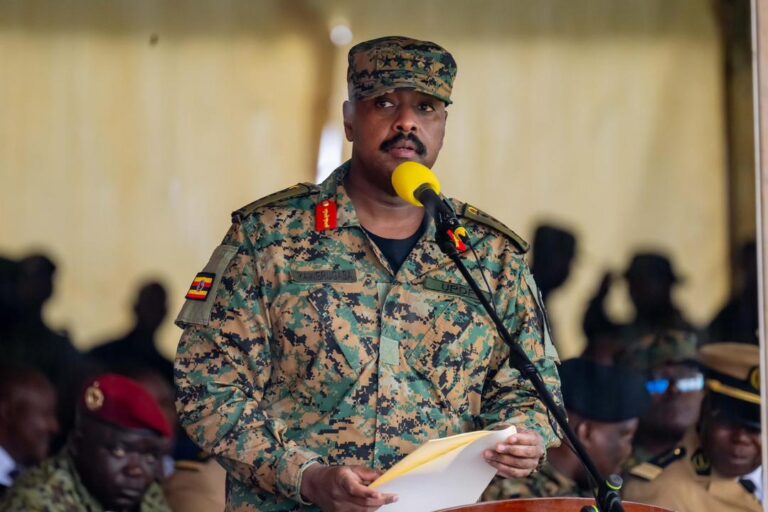
*“I don’t know what they are fighting for because Americans are saying that some of the Latin Americans are sending drugs to the U.S., but we shall learn more. But whatever the case, you can see the gaps I am telling you about. Americans are operating from four dimensions: the sea — and Latin Americans don’t have a navy; the air; space; and now they are trying to come on land… In space, you are at an advantage — you see me, I don’t. In the ocean, I am not there. This is what we are talking about as Africans.”* Daily Monitor.
HE. Gen.Museveni uses the Venezuela crisis to highlight Africa’s strategic vulnerabilities against major powers with multi-domain military advantage, urging African states to strengthen collective defence and cooperation in air, land, sea, and space.
For developing countries, particularly in Africa, Venezuela is not an isolated case; it is a warning flare. Africa holds over 30% of global mineral reserves, 12% of oil, 8% of natural gas, and the world’s largest share of critical minerals for the energy transition—cobalt, lithium, manganese (AfDB, 2022). Yet resource wealth has too often translated into vulnerability rather than power. The lesson is stark: sovereignty without strategic capacity is fragile. States that cannot defend their political autonomy, control narratives, or negotiate resource extraction from a position of strength remain exposed to external manipulation—whether through sanctions, proxy elites, or “humanitarian” interventions.
*What should non-missile, non-superpower countries learn?* You know HE.Gen. Yoweri Kaguta Museveni has been advocating for the Integration, and other leaders have been politicizing it. But truth be said, morality alone does not protect states – capacity does. Secondly, economic independence is inseparable from security. Countries dependent on single commodities or external financing are easily coerced. Third, fragmented regions invite domination. Europe acts collectively; Africa does not—yet. As long as African states negotiate individually with global powers, their leverage remains minimal. The Venezuelan case demonstrates that weakness is not forgiven; it is exploited. International sympathy rarely substitutes for deterrence, unity, or strategic relevance.
Your rhetorical challenge cuts deep: *”When will Africa become powerful enough to do similar things to non-African societies—or at least to defend itself collectively?”* The issue is not domination but dignity and defence. Africa does not need imperial ambition; it needs collective deterrence, strategic industries, technological sovereignty, and a continental security architecture beyond donor dependency. The African Union’s standby force remains largely theoretical. Until African interests carry consequences—economic, diplomatic, or military—they will never be treated as equal to American, European, or Chinese interests. Power is not granted; it is accumulated.
To conclude, The Venezuelan crisis under Trump is not an anomaly; it is a mirror. It reflects a world where law bends to power, resources invite intervention, and responsibility is optional for the strong. Developing countries must abandon illusions about a neutral global order. The task ahead is not moral outrage alone, but strategic awakening— building institutions, regional unity, economic complexity, and defensive capability. Until then, the script will remain unchanged, only the actors will differ. And the final question lingers, unanswered but unavoidable: How many more Venezuelas will it take before the powerless learn that survival in global politics demands power with purpose?