Physical Address
Market Street , Kamokya KAMPALA
Physical Address
Market Street , Kamokya KAMPALA
Akansasira Junior Victor
Writer and Researcher
 0702969211 / 0785499836
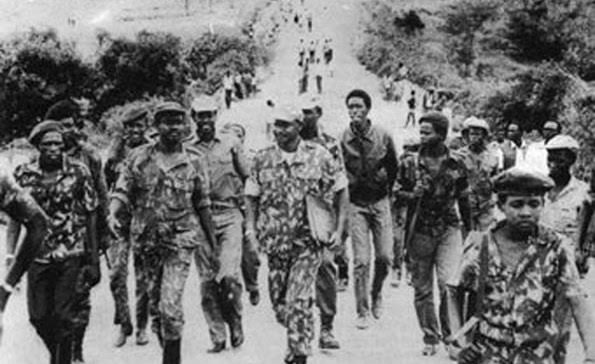
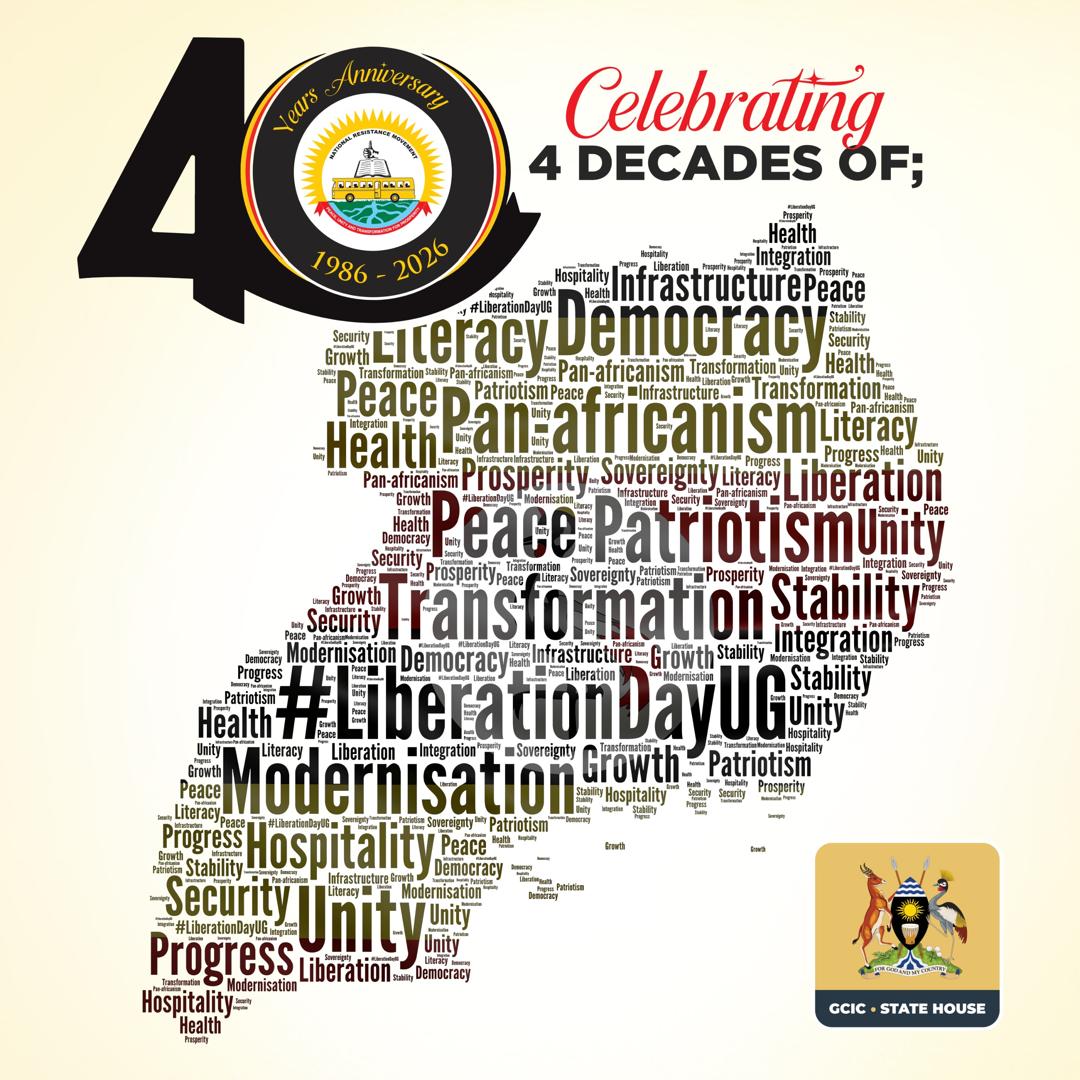
On Monday, 26th January, 2026, Uganda commemorates 40 years since the National Resistance Army (NRA) liberated the country, altering it’s historic trajectory and marking the most decisive rupture in its post-independence history. Between 1971 and 1986, Uganda endured military dictatorship, coups, and civil war under Idi Amin, Obote II, and the Okello junta. Conservative estimates indicate over 500,000 deaths, institutional collapse, and GDP contraction exceeding 25% by the early 1980s. The NRA’s capture of Kampala in 1986 restored sovereignty, ended militarized anarchy, and re-anchored the state on political legitimacy rather than brute force.
Why the NRA took up arms (1981–1986) is a big rhetoric!! See….The NRA struggle began in February 1981 following the widely disputed 1980 general elections, which international observers and domestic actors cited as severely compromised. Led by Yoweri Kaguta Yoweri Kaguta Museveni , a former UPM presidential candidate and trainee of Mozambique’s FRELIMO liberation movement, the NRA framed its war as a revolutionary response to electoral fraud, state terror, sectarian politics, and economic collapse. Museveni later wrote, *“A fundamental change was necessary because Uganda had become ungovernable under old politics.”* The guerrillas accused both Obote II and the Okello junta of extra-judicial killings, army indiscipline, and constitutional breakdown.
Read, Museveni’s, Sowing the Mustard Seed (1997); Commonwealth Observer Group (1980); Kasozi (1994).
The NRA victory differed fundamentally from previous coups because it was ideological and programmatic, not merely a seizure of power. As Museveni declared, *“This was not a mere change of guards; it was a fundamental change.”* Post-1986, Uganda experienced its longest uninterrupted period without nationwide civil war. The army was reorganized into a national force, culminating in the UPDF Act (2005). Constitution-making produced the 1995 Constitution, restoring rule of law and civic legitimacy. Political stability became the foundation for recovery rather than repression. Check – Government of Uganda (1995 Constitution); UPDF Act (2005); Barkan (1994)
Have you seen the Socio-economic reconstruction and measurable gains? You have the better answer. The Liberation enabled sustained economic recovery. Uganda’s GDP grew from about USD 6 billion in 1986 to over USD 45 billion by the mid-2020s, while per-capita income rose from under USD 300 to over USD 1,000. Poverty declined from over 56% in 1992 to about 20%, despite population growth and global shocks. Access to primary education expanded through UPE, increasing enrollment from 2.6 million pupils in 1986 to over 15 million today. Electricity generation expanded from <100MW to over 1,500MW, underpinning industrialization. (UBOS Statistical Abstracts; World Bank Development Indicators; Ministry of Energy and Mineral Development.)
As Uganda marks 40 years of liberation, the 27-gun salute symbolizes sovereignty, supreme sacrifice, and national rebirth. Historically, gun salutes signify legitimate state authority and honor those who secured it through sacrifice. Each gun represents a departure from the violent misrule of past governments and a reaffirmation of disciplined revolutionary politics. NRA revolutionary Salim Saleh once noted, *“We fought to end politics of identity and replace it with politics of purpose.”* The salute honors not weapons, but ideology, discipline, and patriotism.(Uganda People’s Defence Forces Doctrine;, Janowitz (1964) Military Institutions; NRA Historical Archives.)
The unfinished liberation—neo-NRA responsibility! Despite achievements, liberation remains incomplete. President Museveni has repeatedly warned, *“The biggest enemy today is corruption and ideological confusion.”* Approximately 30% of Ugandans remain outside the money economy, limiting inclusive growth. Corruption scandals have drained trillions of shillings, undermining service delivery. Election cycles sometimes revive sectarian rhetoric and neo-colonial manipulation. This reality calls for neo-NRA liberators—citizens committed to productivity, patriotism, ideological clarity, and national over individual or cabal interests.(UBOS National Household Survey)
A call to patriots at home and abroad!
As Uganda commemorates 40 years of NRA liberation, the call goes out to all Patriots and Cadres, Ugandans at home and in the Diaspora: defend the gains, confront the weaknesses, and complete the mission. Liberation gave peace; our generation must deliver prosperity. NRA revolutionary Elly Tumwine once observed, *“Revolutions die when beneficiaries forget their purpose.”* Let us recommit to socio-economic transformation, corruption-free leadership, and national unity. The struggle was worth it. The gains are real. The future remains ours to secure.
This 5 Years Term (PROTECTING THE GAINS) has a lot to turn all the 27 guns on,….Remember the next main liberation frontier-Uganda’s Vision 2040 and the Fourth National Development Plan (NDP IV) which is the true definition of the post-liberation economic offensive: rapid industrialization, value addition, and wealth creation. Priority sectors include oil and gas—with upstream production, a refinery, and petro-industrial linkages—alongside strategic infrastructure such as roads, rail, energy, ICT, and sports and games facilities to harness youth talent and the sports economy.
With over 75% of Ugandans below 30, NDP IV emphasizes innovation, skilling, startups, and digital jobs, while confronting corruption, unemployment, and informality through governance reforms, productivity, and private-sector led growth to fully integrate citizens into the money economy.