Physical Address
Market Street , Kamokya KAMPALA
Physical Address
Market Street , Kamokya KAMPALA
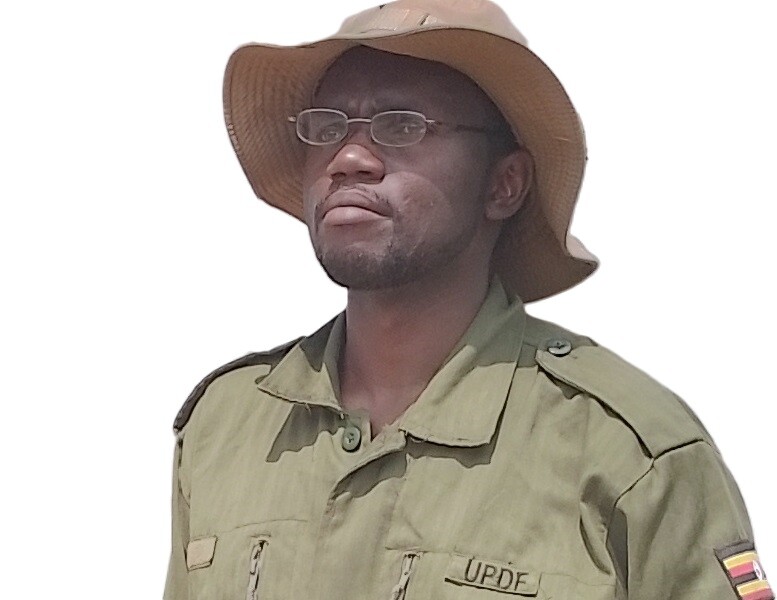
By Akansasira Junior Victor
A Passionate Writer and Researcher,
DS – NALI kyankwanzi.
0702969211 / 0785499836
“We arrived thinking we were leaders, we knew it all…” Cadre Bakesiima Nicholas, Member of NALI Alumni Forum
A two-month 2016 Youth Leadership and Transformative Course was a rebirth to most of us—the youth—who thought that the old generation was tired and so should create space for us to lead. Negation of the negation sunk deeply in our bone marrows.
In August 2016, under the golden sun of Kyankwanzi, I embarked on a journey that shattered assumptions and ignited a flame of purpose. It was not just a course; it was a well-planned ideological sojourn—a two-month transformative leadership crucible hosted at the National Leadership Institute (NALI), under the then Director Brig. Gen. David “Kasura” Kyomukama—now (2025) retired as Maj. Gen. (Rtd.) and serving as the Permanent Secretary, Ministry of Agriculture, Animal Industry and Fisheries (MAAIF). He was deputized by then Col. Patrick Mwesigye, now Brig. Gen., serving as Uganda’s Defence Attaché in Moscow, and formerly the Commissioner, Patriotism Secretariat.
This revolutionary study program was the first of its kind, convened by the State House and directly sponsored by H.E. Gen. Yoweri Kaguta Museveni himself. The President taught us in person three separate times—marking history in motion.
I was among the 291 youth leaders, handpicked from Uganda’s leading youth structures—UNSA, NRM Youth League, National Youth Council, and university guild councils—the so-called cream de la cream of the youth elite. At the time, I was in my first semester of third year at Kabale University. Having returned from Rwanda where I had worked as a licensed teacher to fund my education, I thought I had seen it all. But Kyankwanzi humbled me—quickly and thoroughly.
Like the biblical Saul on his road to Damascus, I was knocked off my intellectual horse. Upon receiving that call from Okello House to report with sportswear and academic documents, my heart galloped like a war drum. Was I dreaming? Could the son of a humble peasant finally have a seat at the national table? My mentor whispered over the phone, “Victor, this will change your mind forever.” He was right. Kyankwanzi did not just change my mind—it rewired my soul.
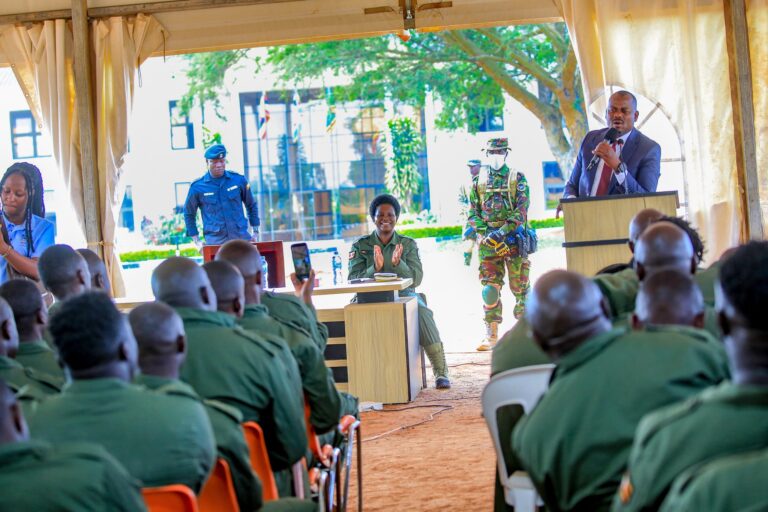
From day one, the program gripped us like a storm. We were “introduced” to camp life through bone-jarring morning runs at 4:00 a.m., dam swimming that chilled our spines and steeled our resolve, and basic military parade drills that tuned our bodies into instruments of discipline. Saturdays were for shooting exercises; Mondays for political education and tough Kiswahili exams. The air was thick with revolutionary rhythm and the smell of burnt gunpowder. This was not a hotel; it was a furnace forging a new generation.
In one class, we sat under the intense glare of Mr. Odauk Paul, who delivered a thunderous lecture titled “Ways of Thinking in Understanding Reality.” His words cut deeper than bullets. He deconstructed our mindsets, stripped away illusions, and demanded that we re-learn the world anew. Other sessions explored Geopolitics, Political Economy, and Revolutionary Methods of Work—subjects not found in ordinary lecture halls. It was here we discovered the dialectical method: the power to analyze history, society, and ourselves with surgical precision.
I recall vividly how we were tasked to draw the map of Uganda and label its physical features: Lake Albert, Mt. Rwenzori, River Nile. We fumbled. We stumbled. Many of us failed. It was a metaphor—a painful metaphor—for our disconnection from our own nation. How can one love what they do not know? This ignorance, we realized, is the first bottleneck to Uganda’s transformation.
In one of his lectures, President Museveni taught us that strategic bottlenecks such as ideological disorientation, weak private sectors, and inadequate infrastructure were the termites devouring Africa’s growth from within. He emphasized that NALI existed to cultivate a new breed of conscious, patriotic thinkers who understood the struggle against neo-colonialism and internal fragmentation. These were not mere words—they were a call to arms of the intellectual kind.
One of my mentors , the current Director of NALI, Col. Okei Rukogota (2025), NALI was born from the Pan-African study groups that Gen. Museveni participated in during his time at Ntare School, where he and other students engaged in ideological debates rooted in anti-colonial liberation, following the spirit of thinkers like Nkrumah and Mwalimu Nyerere. “NALI continues that vision,” Col. Okei stated in one of his lectures of opportunity to the NRM Cadres “Because Africa’s rebirth requires intellectual warriors, not just politicians.”
Back then, most of us came in thinking we knew Uganda—but we soon found we were strangers in our own house. Some of our colleagues had returned from abroad, bloated with confidence and air-conditioned pride. But Kyankwanzi, in her infinite humbling power, brought us all to our knees. We were equals before truth.
One serene morning after just a dose of rest in Nkrumah dormitory, with the likes Hon.Anderson Burora former RCC- Nakawa and Lubaga, Current Youth MP Western Region-Hon.Edison Rugumayo, Current Youth MP Eastern Region – Hon.Odoi Bernard Onen and others preparing for a long day of field drills, I sat under the big acacia tree next Dr. John Garang De Mabior Dining Hall, staring at the bright rays scorching through, as I meditated on Pearl of Africa-Uganda , whole-wounded, yet pregnant with potential. We had spent weeks in some historical ( pre, post , during colonial history) lectures diagnosing her pain—ethnic divisions, a bloated civil service, donor dependency, youth unemployment—and yet, somehow, we still believed in her. NALI had made patriots out of skeptics.
The political education classes demystified the concept of politics. We had grown up believing politics was a *“dirty game.”* But at NALI, we learned it was the art of organizing society—the compass of civilization. We understood why HE. Gen. Yoweri Kaguta Museveni insists that ideology is everything especially to strengthen the socioeconomic transformation agenda and Vision 2024.The absence of ideology, he warned, leads to Somalia-like chaos—where anarchy devours dreams.
HE. Gen. Museveni Kaguta, duration his Interview with The Africa Report – March 2020, “This ideological disorientation is like addiction… See how much damage it’s doing to the Middle East? Shia, Sunni… ideological. It is philosophy, it is ideology.”*
Also duration the State banquet speech in Maputo, Mozambique – May 2015
Quote: *“One point is the question of ideological disorientation… this ideology of sectarianism and chauvinism is a pseudo‑ideology that… eclipses the very people’s legitimate interests of economic exchange, interaction and shared prosperity.”*
What struck me most was the idea of unlearning. We were taught that transformation starts not with gaining new knowledge, but in shedding the mental parasites we inherit from colonial schooling, foreign media, and even toxic communities. We needed to re-learn Uganda—from her soils to her soul.
NALI is not an indoctrination centre; it is an awakening. It is Socrates in the savannah, Plato under pine trees. It is where you meet Uganda—not on a map, but in your marrow.
From that course, my biggest takeaway was that Uganda’s path to transformation lies in rediscovering her mission, and knowing her enemies—both internal and external. We must unite, eliminate corruption, build production capacity, and promote Pan-African solidarity to withstand the predatory global economy. As Museveni once said during our pass-out parade:
“You are holding a golden egg in your hand—guard it, or you’ll regret like our past generations who watched Uganda burn.”
At the pass-out, under blazing sun and salutes from generals, I stood taller—not in height, but in purpose. The ground beneath me was no longer dirt—it was sacred soil. NALI had taught me how to love Uganda with my mind, not just my mouth.
Not to forget, Kyankwanzi wasn’t just a location—it was a rebirth. I came out with my colleagues with muscles sore and a spirit sharpened. I recommend more courses of this kind – a NATIONAL SERVICE PROGRAM as Kenya’s NYS the all Ugandan youth the holy book – The Constitution is clear UNDER ARTICLE 17 – Duties of a Citizen.
Clause 1(e): *It is the duty of every citizen of Uganda “to defend Uganda and to render national service when necessary.”* Also, Clause 2: States that *“all able‑bodied citizens” are required to undergo military training for the defence of the Constitution and the territorial integrity of Uganda whenever called upon by the state, and the state must ensure such training facilities are made available.* I am grateful that I fulfilled my Constitutional mandate.
The road to transformation begins not with complaints, anguish, blame games on social media, but with sweat, learning, humility, and patriotic conviction.
At NALI, I found Uganda—and I found myself.