Physical Address
Market Street , Kamokya KAMPALA
Physical Address
Market Street , Kamokya KAMPALA
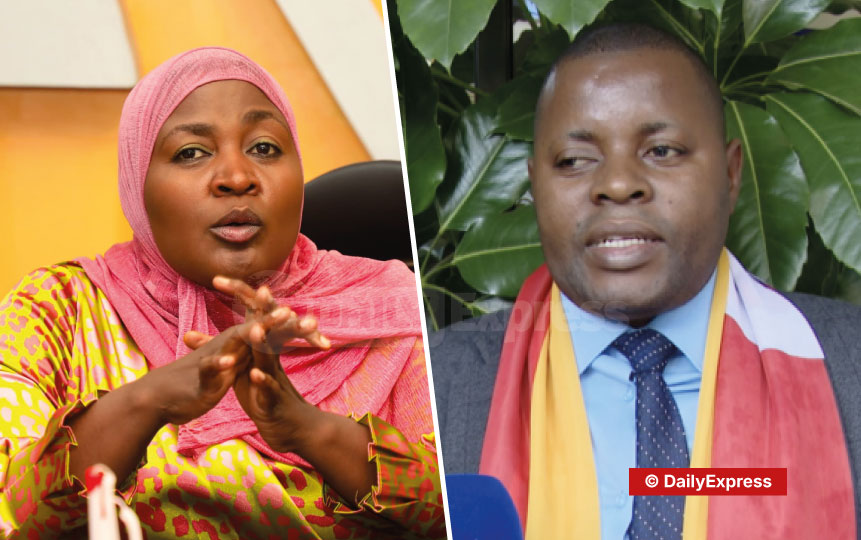
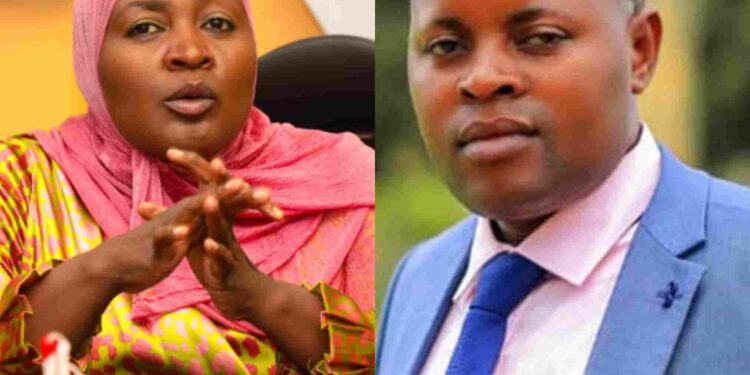
In a move that echoes the old maxim “discretion is the better part of valor,” former presidential candidate Robert Kasibante has formally withdrawn his petition challenging President Yoweri Kaguta Museveni’s victory in the January 15, 2026 presidential election, citing overwhelming financial and technical constraints that rendered the pursuit of the case impracticable.Kasibante had earlier lodged Presidential Election Petition No. 1 of 2026 before the Supreme Court, seeking to contest the declared results. However, in his application to withdraw, he clarified that the evidentiary demands of the case—particularly the need for a comprehensive forensic audit of electoral materials such as voter registers, electronic scanning systems, and declaration forms—required specialized expertise and extensive funding beyond his personal capacity. In legal warfare, as in battle, one must count the cost before marching forward.Hajjat Hadijah Namyalo, Manager of the Office of the National Chairman (ONC), welcomed the development, characterizing it as “wise and forward-looking,” and a demonstration that reason sometimes triumphs where resistance alone cannot. She observed that although Kasibante had initially been assured financial and logistical backing by certain political actors, those promises dissolved into thin air, leaving him to navigate a highly complex legal undertaking single-handedly. As the saying goes, “A promise without provision is a bridge that ends midstream.”“When the anticipated support failed to materialize, sustaining such a technically demanding and financially draining case became untenable. Withdrawal, therefore, was not surrender—but responsibility,” Namyalo remarked. She emphasized that presidential election petitions rank among the most intricate and resource-intensive proceedings in Uganda’s judicial system, often hinging on expert testimony, digital scrutiny, and painstaking technical validation. Indeed, the wheels of electoral justice are precise—but they are not cheap to turn.Namyalo further noted that the withdrawal could help lower post-election temperatures and redirect national energy toward constructive development. In her view, the decision clears the fog of prolonged legal confrontation and opens the road to stability, reminding observers that “after the storm, wise builders return first to the foundation.” She framed the move as a contribution to national calm and a smoother post-election transition.Should the Supreme Court formally approve the withdrawal, one of the principal legal challenges to the 2026 presidential results will effectively conclude, enabling President Museveni to concentrate fully on preparations for his forthcoming term. Political analysts suggest that this development may also encourage broader political cohesion, as public discourse shifts from courtroom contestation to governance, service delivery, and the execution of the national development agenda. After all, nations grow not in endless disputes, but in deliberate action.Kasibante’s decision ultimately casts a revealing light on the steep financial, logistical, and technical mountains that confront candidates who seek to challenge presidential election outcomes in Uganda. It is a reminder that in law, as in life, not every worthy fight is a winnable one—and wisdom lies in knowing the difference.