Physical Address
Market Street , Kamokya KAMPALA
Physical Address
Market Street , Kamokya KAMPALA
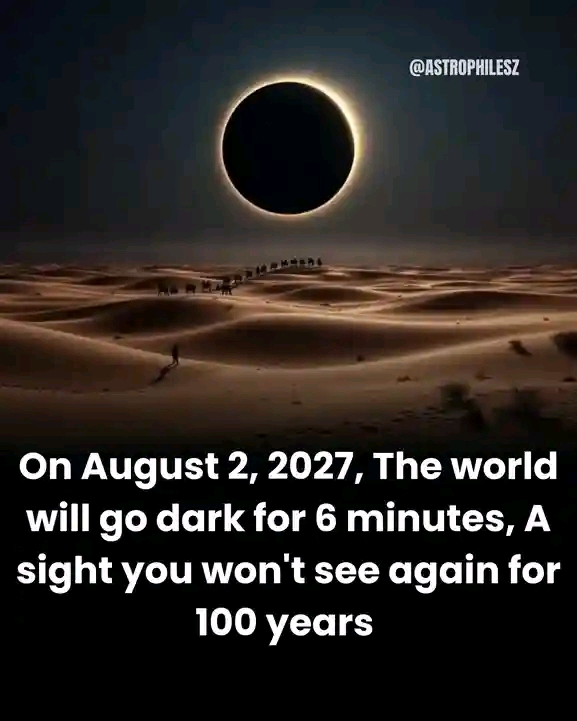
The last time land-based observers experienced totality this long was 1991, and the next comparable opportunity comes in 2114.
The path of totality crosses Spain, Gibraltar, Morocco, Algeria, Tunisia, Libya, Egypt, Saudi Arabia, Yemen, and Somalia. The peak duration of 6 minutes and 22 seconds occurs near Luxor, Egypt, directly over some of the most ancient astronomical sites on Earth.
The reason this eclipse runs so long is geometry. The Moon will be near perigee, its closest point to Earth in its orbit, making it appear slightly larger in the sky than average. A larger apparent Moon means a wider shadow cone and a longer window of totality for anyone standing on the centreline.
Six minutes of totality is rare enough that most people who witness a total eclipse never experience one this long in their lifetime. The average total eclipse lasts around 2 to 3 minutes.
During those 6 minutes, the sky darkens to a deep twilight. Stars and planets become visible in daytime. The temperature drops sharply. Animals behave as though night has fallen. The Sun’s corona, its outer atmosphere normally invisible against its brightness, blazes into view as a white halo, a sight that has no equivalent in any other natural event.
Ancient civilisations recorded total eclipses as among the most terrifying things they ever witnessed. Now we predict them to the second, plan travel itineraries around them, and book hotels along the path of totality years in advance.
The science removed the fear. It did nothing to diminish the spectacle.