Physical Address
Market Street , Kamokya KAMPALA
Physical Address
Market Street , Kamokya KAMPALA
Dear Globals
The world is once again asking a familiar question: “What exactly is the conflict with Iran about? The explanation we hear today is that it is about nuclear weapons, regional security, and global stability.Governments say the objective is to prevent the spread of dangerous weapons and protect international peace.But if we pause for a moment, history invites us to ask a deeper question.Seventy years ago, another country found itself at the centre of global attention — Guatemala.
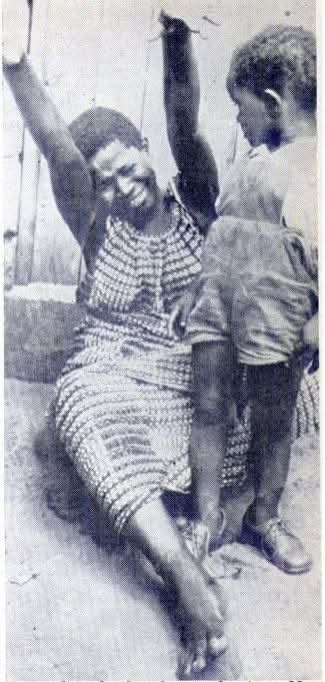
In 1954, the democratically elected president *Jacobo Árbenz* introduced land reforms aimed at redistributing unused estates to poor farmers. In a country where vast lands were owned by a few corporations, many citizens saw this as a step toward fairness and dignity.One of the companies affected was the powerful *United Fruit Company,* which controlled enormous agricultural estates.Yet in the climate of the Cold War, Árbenz’s policies were not interpreted simply as economic reform. They were framed as a communist threat.
Under *Dwight D. Eisenhower,* the Central Intelligence Agency *(CIA)* supported a covert operation that forced Árbenz to resign.At the time, the explanation sounded convincing: the United States was protecting the world from communism.*But history did not stop there.*When the *Soviet Union collapsed,* the ideological enemy disappeared. Yet global interventions did not disappear with it.*What changed instead was the language.
During the 1990s, the world spoke about promoting democracy and free markets.After the September 11 attacks, the dominant language became fighting terrorism and protecting security.Today, the vocabulary increasingly revolves around *human rights, nuclear threats, and global stability.*Seen through this long historical lens, the story of Jacobo Árbenz raises an important question for global citizens:If the explanations for intervention change from communism, to democracy, to terrorism, and now to security and human rights, what exactly has changed in the structure of global power?*Has the world truly transformed?*Or have we simply witnessed new moral vocabularies describing old geopolitical realities?This reflection is not about blaming one country or another. It is about developing global consciousness, the ability to look beyond headlines, and ask deeper historical questions about power, language, and narratives.
I will soon explore this topic further in my Weekly Monitor column, so please watch the space.*Meanwhile, conversations like this are exactly why the Global People’s Network (GPN) exists.GPN is a growing platform where ordinary citizens across the world reflect together on history, power, civilisation, and the future of humanity.*Join the crusade for Global Consciousness.*If you are interested in participating in these discussions and contributing to a more informed global conversation, you are welcome to join the GPN community.*
Let us continue raising awareness, asking questions, and building a more conscious global society, one conversation at a time.Ciao*Gertrude Kamya Othieno
Founder, Global People’s Network (GPN)gokbooks@gmail.com