Physical Address
Market Street , Kamokya KAMPALA
Physical Address
Market Street , Kamokya KAMPALA
By Cadre Nabasa Wilson Alex
Cutting National Celebrations May Save Shillings, But It Could Cost Uganda National Cohesion.Recent remarks attributed to the Secretary to the Treasury, Ramathan Ggoobi, suggesting that Government is rationalising expenditure by stopping spending on the organisation of national celebrations such as International Women’s Day, Labour Day, Independence Day and other commemorative events have sparked an important national debate.
While every Ugandan agrees that public resources must be used prudently, we must also ask a fundamental question: Are national celebrations merely expenses, or are they strategic investments in national unity, accountability and development?I strongly believe that reducing or scrapping these national events in the name of saving money would be a mistake.
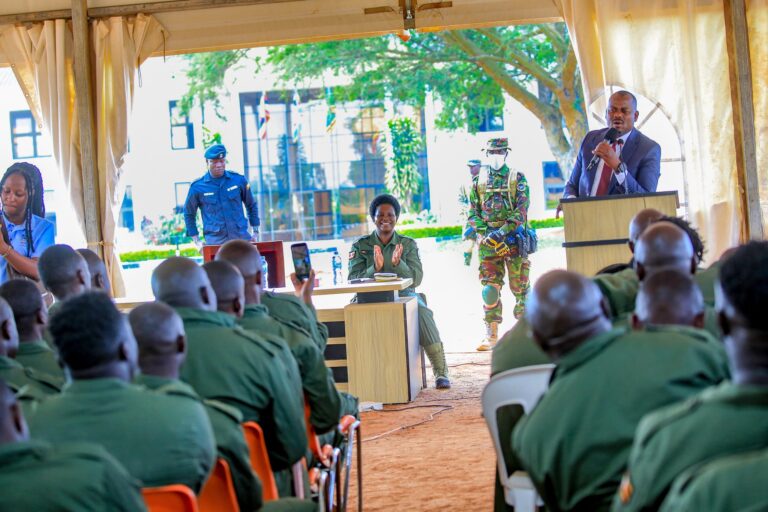
National Events Bring Government Closer to the People.One of the greatest advantages of rotating national celebrations across different districts is that they bring the entire Government closer to ordinary citizens.When Independence Day, Women’s Day or Labour Day celebrations are hosted in districts across Uganda, Cabinet Ministers, Members of Parliament, Permanent Secretaries, technical officers and other government leaders are compelled to leave the comfort of Kampala and interact directly with communities.No report on paper can replace what leaders see with their own eyes.A minister who drives through poor roads, visits health facilities, interacts with farmers and listens to local leaders gains a deeper understanding of the realities affecting citizens. Such visits often accelerate government interventions because decision-makers witness challenges firsthand together.
National celebrations therefore serve as unofficial inspection tours for government officials and provide an opportunity for citizens to engage leaders directly. President Museveni Has Used National Events to Identify Development Gaps.President Yoweri Kaguta Museveni, who is usually the Chief Guest at most national celebrations, has repeatedly used such occasions to assess the country’s development progress.Ugandans will recall occasions when the President publicly commented on infrastructure improvements after visiting host districts.
During one national function in Kamwenge, he reportedly observed improvements in road infrastructure and remarked that Uganda was becoming sweet for him( Uganda entandise okumpomela) to travel through because of ongoing development.Similarly, during visits to the Busoga sub-region, the President encountered communities still struggling with poor road connectivity. He questioned local leaders and Members of Parliament on why such critical infrastructure gaps persisted and directed that some roads be considered in national planning and development priorities.These examples demonstrate that national celebrations are not merely ceremonial gatherings. They are opportunities for the Head of State and senior government officials to evaluate service delivery, identify development bottlenecks and make immediate policy interventions.Without such engagements, many local challenges may remain hidden in reports and presentations.Should Government Leaders Stop Meeting the People?
Another important question arises.If President Museveni has consistently been the Chief Guest at national celebrations, should policies be introduced that effectively reduce opportunities for him and other government leaders to interact directly with citizens? National events provide a platform for citizens to hear directly from their leaders and for leaders to receive immediate feedback from the people they serve.Democracy and good governance thrive when leaders remain connected to citizens, not when they become distant from them.
The strength of the National Resistance Movement (NRM) has always been its philosophy of mass participation and people-centred leadership. Any policy that unintentionally reduces direct interaction between Government and citizens deserves careful reconsideration.
National Celebrations Stimulate Local EconomiesThere is also an economic dimension often ignored in discussions about cutting such events.The money spent on national celebrations does not disappear.It circulates within the economy.Whenever a district hosts a national function, local businesses benefit immensely. Service providers supply tents, chairs, public address systems, food, accommodation, transport, fuel, stationery, branding materials and other logistical requirements.Hotels receive guests.Restaurants record increased business.
Youth groups secure temporary employment.Local suppliers earn income.Transport operators make profits.The multiplier effect of such spending supports livelihoods and contributes to economic activity within host districts.
Therefore, the discussion should not only focus on expenditure but also on the economic value generated through these events.The Real Problem Is Corruption, Not National CelebrationsIf Government genuinely seeks to save money, the most effective target should be corruption, wastage and inflated procurement costs.Year after year, reports from oversight institutions have highlighted concerns regarding misuse of public funds, inflated contracts, ghost activities and irregular expenditures.Billions of shillings can be saved by strengthening accountability systems, improving procurement processes and ensuring that organisers of public events are subjected to strict financial scrutiny.The challenge is not necessarily the existence of national celebrations.The challenge is ensuring that every shilling allocated is properly accounted for.If corruption is eliminated from the organisation of public events, Government would save substantial resources without sacrificing opportunities for citizen engagement and national unity.
A Better AlternativeRather than abolishing or drastically reducing national celebrations, Government should consider:
* Reducing unnecessary protocol expenses.
* Strengthening procurement oversight.
* Limiting excessive allowances.* Increasing transparency in event budgeting.
* Auditing all expenditures related to national functions.
* Encouraging greater participation of local service providers at competitive rates.
These measures would achieve cost savings while preserving the important national benefits associated with these celebrations.
In Conclusion, National celebrations are more than ceremonies.They are platforms for national unity, accountability, economic stimulation and direct engagement between leaders and citizens.As Uganda continues its development journey, we should be cautious about adopting policies that may widen the distance between Government and the people.The objective should not simply be to spend less money.The objective should be to spend public resources wisely while maintaining the strong connection between Government and citizens that has been a cornerstone of Uganda’s political stability.Remember the saying that African eyes are in hands, watching such events on TV carries no impact.
If savings must be made, let them come from fighting corruption, eliminating wastage and strengthening accountability, not from reducing opportunities for leaders to meet the people they serve.Uganda needs a Government that is visible, accessible and connected to its citizens. National celebrations remain one of the important avenues through which that connection is strengthened.
The writer is a Cadre of the National Resistance movement, a patriot and a Pan Africanist.
nabasaalex@hotmail.com
0772909338